
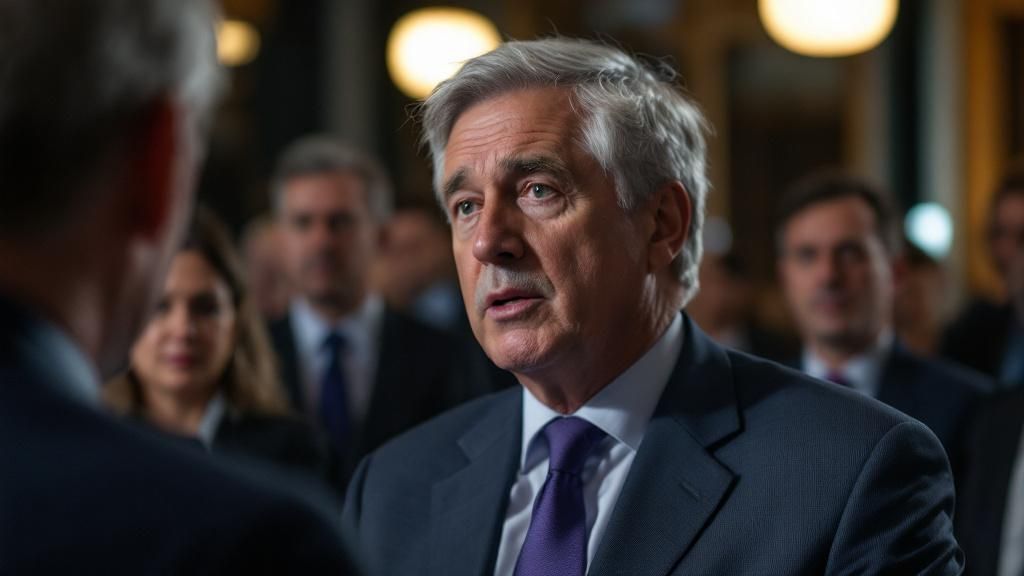
As households nationwide contend with soaring energy bills and inflation hitting unprecedented levels, the Labour leader has initiated a fierce attack on the Government’s response to the cost of living crisis. In a tense parliamentary exchange, the Labour party has challenged the administration’s limited relief measures, demanding more substantial intervention to help hard-pressed families. This article examines the escalating divisions surrounding the crisis and considers the contrasting approaches for economic relief.
The Opposition’s Criticism of Government Policies
The leader of the opposition has increased pressure of the government’s handling of the mounting cost-of-living emergency, arguing that present interventions fail significantly to addressing the scale of hardship facing British households. In parliamentary debate, the opposition has presented a comprehensive critique covering insufficient financial assistance, limited involvement in energy markets, and a apparent shortage of speed in addressing inflation. The opposition maintains that whilst families struggle with extraordinary costs, the government’s fragmented strategy only addresses surface issues rather than dealing with fundamental causes of economic hardship.
Central to the opposition’s position is the claim that the government has badly miscalculated both the extent and timeframe of the crisis. Opposition representatives have pointed to figures showing that millions of households now experience real hardship, with many compelled to decide between keeping warm and feeding themselves. The opposition maintains that the government’s first response did not fully gauge the crisis’s impact, leading to assistance programmes that were found wanting when circumstances deteriorated further. This miscalculation, they argue, reflects wider shortcomings in forecasting accuracy and policy preparation.
Limited Assistance Provisions
The opposition has specifically targeted government support schemes as inadequate and misdirected, contending that energy price cap mechanisms fall short of protecting at-risk groups adequately. Commentators highlight that whilst the government has implemented various financial interventions, encompassing grants and council tax rebates, these measures deliver limited reprieve without addressing structural challenges. The opposition maintains that eligibility-based assistance remain overly stringent, leaving out millions of working families who yet struggle with escalating prices. Furthermore, they argue the government’s approach falls short of the ambition required to tackle such an unparalleled economic difficulty.
Opposition analysis suggests that present welfare systems unfairly harm those earning mid-range salaries who fall between access requirements for focused aid. The party has proposed new models involving unconditional income transfers, broadened support schemes, and direct government intervention in energy markets to control costs. They highlight that interim steps, though beneficial, fail to replace deep-rooted transformation. The opposition argues that without substantial legislative change and greater state spending, working people will continue experiencing acute financial strain throughout the foreseeable future.
Long-range Financial Strategic Concerns
Beyond pressing crisis intervention, the opposition has raised fundamental questions regarding the government’s long-term economic strategy and competitive position. Opposition analysts argue that the present method emphasises short-term political optics over sustainable economic planning, risking damage to Britain’s future prosperity. They contend that without deliberate investment in renewable energy infrastructure, productive capacity, and workforce development, the nation risks sustained economic decline. The opposition underscores that addressing cost of living pressures requires wide-ranging reforms tackling productivity, creative advancement, and economic sector development alongside urgent relief measures.
The opposition has articulated concerns that government policy lacks coherence across different areas, with energy policy, industrial strategy, and fiscal measures working independently rather than as integrated components. Critics argue this fragmented approach prevents effective addressing of core inflationary challenges and structural economic weaknesses. The opposition pushes for a integrated strategic framework including energy transition, manufacturing revival, and skills development. They maintain that genuine crisis resolution demands transformative policy reform rather than gradual modifications to existing frameworks.
Government’s Defence and Counterarguments
The government has steadfastly defended its economic strategy, arguing that the affordability pressures are chiefly driven by international forces beyond direct Westminster oversight. Ministers have underscored the extraordinary scale of the energy shortage, resulting from geopolitical conflicts and worldwide supply chain interruptions. They contend that their focused assistance measures, including the energy price ceiling and affordability support payments, embody a measured and fiscally responsible approach. The Finance Ministry maintains that overspending could compound inflation even more, undermining sustained economic stability and eventually harming the same families the opposition purports to support.
Government officials have highlighted the significant monetary support already deployed, amounting to billions of pounds in direct support to those in need. They argue that their measures balance short-term assistance with prudent fiscal management, avoiding the debt spiral that unchecked spending could cause. Ministers also highlight their work in strengthening energy independence through renewable investments and market diversification. The government asserts that whilst the opposition offers sympathetic rhetoric, their proposed solutions lack economic credibility and would become unaffordable without increasing taxation or greater public borrowing.
Furthermore, state representatives highlight their resolve to confronting underlying economic challenges through output gains and corporate investment encouragement. They contend that enduring recuperation necessitates structural economic reforms rather than temporary handouts. The administration believes this approach ultimately delivers increased wealth and protection for every citizen.
